








Intro
If you’re searching for drovenio remote it jobs usa, you’re probably not looking for vague “tech career” inspiration you want real opportunities, clear job categories, and practical guidance on how to approach remote IT hiring in the United States. Remote work can be a great fit for the right kind of person: someone who communicates well, enjoys problem-solving, and can stay consistent without an office environment pushing them forward.
In this guide, I’ll walk you through what remote IT jobs typically include, which roles show up most often, the kinds of skills employers expect, and a straightforward way to search and apply so you can spend less time guessing and more time landing interviews.
Bio
| Label | Information |
|---|---|
| Article Focus | Remote IT jobs in the USA |
| Keyword Highlight | drovenio remote it jobs usa |
| Platform Mention | Drovenio |
| Job Types Covered | Support, systems, cloud, security, IT delivery |
| Main Goal | Help readers find and apply faster |
| For Who | US-based job seekers |
| How It Works | Search by category and read responsibilities |
| What to Match | Skills, tools, and remote communication |
| Application Tip | Tailor a few resume bullets per role |
| What to Avoid | Generic applications |
| Most Important Skill | Troubleshooting and clear communication |
| Key Reference | NIST NICE for cybersecurity roles |
| Reader Outcome | More confident, targeted job applications |
Why Remote IT Jobs Feel Different in the United States
Remote IT work in the US is not just “the same job, but from home.” It often means you’ll be trusted to manage your work with fewer check-ins, communicate clearly across teams, and document issues so others can follow what you found and what you did.
That matters because many IT roles involve ongoing systems, tickets, and escalation paths. When something breaks, the timeline is usually tight. Remote teams tend to rely heavily on written updates, ticket history, and collaboration tools so nobody has to “re-explain” the whole situation every time there’s an update.
Also, the US job market continues to evolve for computer and information technology occupations. The US Bureau of Labor Statistics projects faster-than-average employment growth across many roles in this broader field.
What You Should Expect From Remote IT Roles
Most remote IT jobs fall into clusters that share similar day-to-day patterns. Even when job titles differ help desk, technical support, systems support, cloud engineer, security analyst your workflow often overlaps.
Remote hiring managers typically care about three things:
1) Can you solve problems methodically?
You don’t need to be perfect. You do need a consistent way to troubleshoot, verify, and document.
2) Can you work with others without constant supervision?
Remote roles often depend on ticket updates, clear handoffs, and quick responses during working hours.
3) Can you communicate the “why,” not only the “what”?
In IT, context matters. “We fixed it” is helpful, but “we fixed it because X, we confirmed Y, and we prevented Z” is what builds trust.
Where Drovenio Fits Into the Search
When people look for drovenio remote it jobs usa, they’re usually trying to find roles without spending hours across multiple sites. A platform like Drovenio can help if it presents listings in a way that makes scanning easier and applying more consistent.
A realistic expectation is this: job boards and aggregator platforms can be helpful for discovery, but the real work still happens at the job listing level. Treat each posting as the source of truth for responsibilities, required tools, location rules, and eligibility details. Your best outcomes usually come from tailoring your application to the posting not using the same resume everywhere.
The Remote IT Categories Most Likely to Show Up
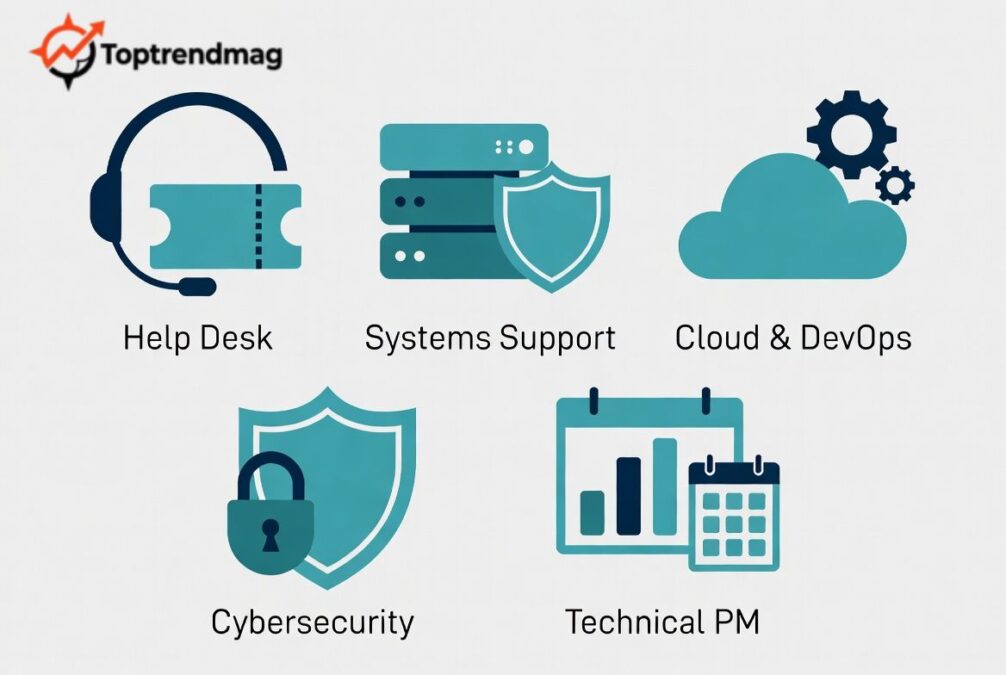
Remote IT hiring broadly clusters into support, engineering, security, and operations. Here are the categories you should watch for, along with what employers typically want.
Help Desk and Technical Support
These roles are often the most approachable entry point for remote IT careers. You might work with:
- Ticket-based troubleshooting
- Password resets and account access
- Basic software and hardware issues
- System permissions and user onboarding
- Documentation in knowledge bases
If you’re aiming for roles like this, the “soft” skills matter as much as technical ability. You’ll be translating technical behavior into clear explanations for users who may not speak IT fluently.
Systems and IT Support
Systems support is a step toward more technical ownership than help desk. You may see responsibilities like:
- Managing user environments across devices
- Monitoring services and resolving issues
- Supporting workstation and server infrastructure
- Basic patching workflows
- Supporting identity systems and directory services
A strong resume for these roles usually shows stable experience with common admin responsibilities plus examples of how you reduced repetitive issues.
Cloud and DevOps
Cloud and DevOps roles are remote-friendly because much of the work is already handled through tools and automation pipelines. Expect responsibilities like:
- Deployments and environment setup
- Improving reliability and reducing downtime
- Working with CI/CD pipelines
- Infrastructure automation and repeatable workflows (conceptually)
If you don’t yet have a full “DevOps” title experience, many candidates succeed by framing related work: automation scripts, cloud fundamentals, deployment experience, and troubleshooting production incidents.
Cybersecurity and SOC-Type Work
Cybersecurity is one of the most in-demand areas in IT, and it’s also one of the most structured. You’ll often see requirements tied to frameworks and role-based skills.
One helpful resource for understanding how cybersecurity work is organized is the NICE Workforce Framework for Cybersecurity from NIST. It provides a common language for cybersecurity roles and skills, helping job seekers understand how different work roles map to knowledge and abilities.
Even if a specific job posting doesn’t mention NICE, the pattern of “tasks + skills” is very common in cybersecurity hiring.
IT Project Management and Technical Program Work
Not every remote IT job is hands-on with servers or code. Some remote roles focus on planning and delivery. You may see:
- Coordinating technical projects
- Managing scope, timelines, and stakeholder communication
- Tracking delivery against milestones
- Ensuring documentation and process alignment
Technical PM roles often prefer candidates who can understand enough technical context to ask the right questions and reduce ambiguity.
Skills Employers Commonly Look For
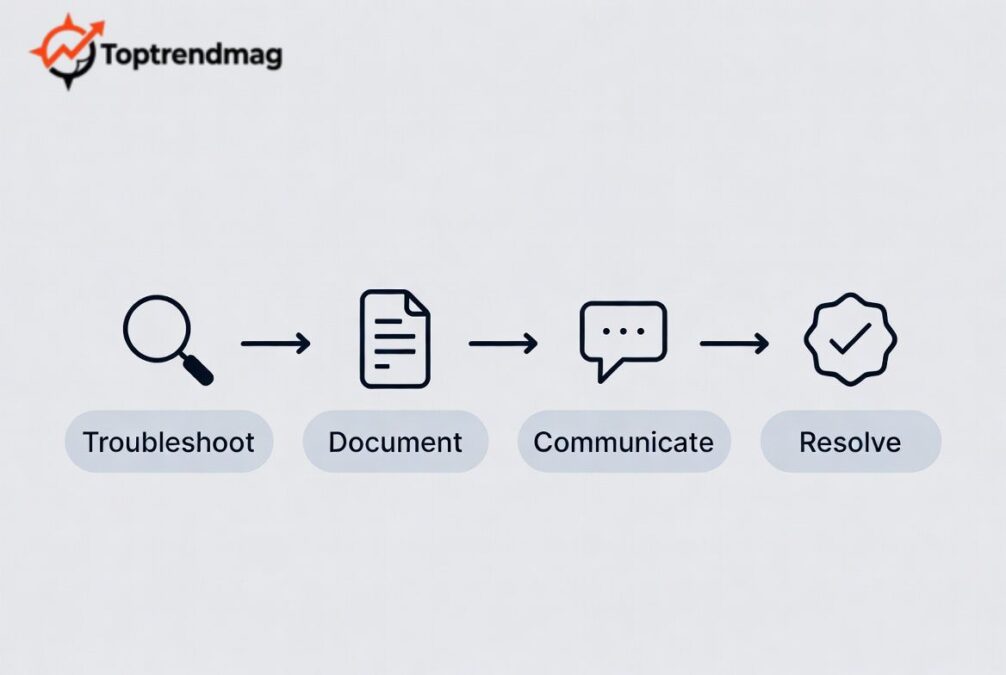
You’ll get better results when you stop thinking of skills as a checklist and start treating them as a story. Employers want evidence that you can do the work reliably.
Here’s a practical breakdown.
Technical Skills That Transfer Across Remote IT Jobs
You’ll see repeated themes across job postings:
- Operating systems fundamentals (Windows and/or Linux)
- Networking basics (DNS, routing concepts, troubleshooting logic)
- Identity and access concepts (accounts, permissions, authentication workflows)
- Ticketing tools and incident workflow
- Scripting or automation fundamentals (even basic scripting can help you stand out)
Documentation and Communication
Remote IT roles frequently require documentation. This isn’t just “nice to have.” In many teams, your written update becomes the record of what happened, what was attempted, and what the final outcome was.
A practical goal: keep your own evidence ready. For example:
- Write short troubleshooting summaries for your projects
- Maintain a small “what I fixed and how” portfolio
- Keep notes on tools you used and why
Cybersecurity Skills Framework Literacy (When Applicable)
For security roles, it helps to understand that hiring often expects structured competence. NIST’s NICE framework exists for exactly that purpose: to define and organize cybersecurity work so training and hiring align to knowledge and skills.
You don’t need to quote the framework in applications. But if you can mirror the structure talk in terms of tasks you performed and skills you demonstrated you’ll come across as more prepared.
How to Search for Drovenio Remote IT Jobs USA Without Wasting Time
Here’s a straightforward process you can apply every time you open a listing platform. The goal is not to “apply to everything.” The goal is to apply to the roles where your background matches the employer’s actual needs.
Step 1: Filter by role type first
Start with category alignment:
- Support roles → support workflow evidence
- Cloud roles → cloud troubleshooting and deployment evidence
- Security roles → security tasks, incident readiness, and structured learning evidence
This prevents mismatches that usually lead to quick rejections.
Step 2: Read the responsibilities for the real job
Job titles can be misleading. Responsibilities reveal the actual work. When you scan a posting, look for phrases that show:
- the workflow (tickets, escalations, monitoring)
- the rhythm (daily triage, weekly maintenance, on-call windows)
- the ownership level (advising vs executing vs escalating)
Step 3: Track what the employer is signaling
A good posting often repeats its “must-haves” in multiple ways:
- required tools appear in responsibilities and qualifications
- communication expectations show up in “you must be able to…” lines
- remote requirements show up in how they describe collaboration
Create a simple match list:
- Required tools I’ve used: yes/no
- Tasks I’ve done: list them
- Communication I’ve practiced: examples
- Any gaps: what I’ll explain confidently
Step 4: Tailor your resume bullets
Tailoring doesn’t mean rewriting your entire resume. It means selecting 2–4 bullets that directly match the listing’s work.
For example, if the job emphasizes incident response and troubleshooting:
- emphasize your troubleshooting steps
- include what you verified
- show outcomes (reduced repeat issues, faster resolution times, fewer escalations)
Step 5: Keep a lightweight application tracker
Remote job searches often fail due to follow-up chaos, not lack of qualifications. Track:
- job title and posting date
- where you applied
- resume version used
- any follow-up date you plan to do
What Makes an Application Feel “Human” to Employers
Hiring managers read fast. If your application feels generic, you lose momentum. The easiest fix is to make your application reflect the actual job responsibilities.
Try these three habits:
1) Use the same language as the posting carefully.
If the posting mentions ticketing and documentation, your resume should mention documentation and ticketing too. Don’t overstuff keywords just align.
2) Make your achievements concrete.
Instead of “Responsible for troubleshooting,” write “Resolved recurring login ticket issues by updating access workflows and documenting the fix for tier escalation.” That style reads like experience, not just ambition.
3) Include “proof of work,” not only claims.
If you’ve built a lab, documented a troubleshooting guide, or contributed to a project, mention what you did and what changed because of it.
Common Mistakes When Applying to Remote IT Jobs USA
Even strong candidates get overlooked for predictable reasons. Avoid these:
Applying without matching your experience level
If you’re entry-level, apply to support and technician tracks first. If you only apply to senior engineering roles, you’ll burn your time and lose confidence.
Ignoring remote communication expectations
Remote hiring is often about reliability. If you can’t show you communicate clearly through written updates or documentation habits, that’s a weakness to address.
Focusing only on tools
Tools matter, but hiring managers also look for how you approach the work:
- Do you troubleshoot methodically?
- Do you escalate appropriately?
- Do you confirm outcomes?
Tools without process usually don’t last in remote teams.
Using the same resume for every posting
One resume for all roles can work only if the roles are extremely similar. Support roles and cloud roles require different emphasis. Adjust your top bullets each time.
Sample Job Search Paths You Can Copy
If you want a more guided approach than “search randomly,” pick a path and apply within it.
Path 1: Support to Systems Support
Start with help desk, focus on:
- ticket troubleshooting evidence
- user onboarding and access troubleshooting
- documentation and escalation examples
Then apply to systems support roles where ownership increases.
Path 2: Cloud Fundamentals to Cloud/Platform Roles
If your background includes scripting, automation, and basic cloud work:
- apply to cloud support engineer or junior cloud roles
- build evidence of troubleshooting deployments and improving reliability (even in lab environments)
Path 3: Security Fundamentals to SOC-Style Roles
For security:
- align your resume with monitoring, triage, and incident workflow concepts
- show structured learning (projects, labs, documentation)
- use role-aligned language drawn from common frameworks like NICE when it helps structure your examples
Path 4: Technical PM for Remote Delivery
If you’re strong at coordination:
- focus on delivery tracking, stakeholder communication, documentation, and risk management examples
FAQ
Are remote IT jobs in the USA limited to specific locations?
Some roles are truly US-wide, while others require proximity to time zones, office visits, or work authorization specifics. Always read the posting carefully for eligibility and remote policy language.
Do I need cloud experience for every remote IT job?
No. Many remote IT jobs are support-focused. Cloud experience becomes relevant mostly for cloud engineering, DevOps, and platform work. If the posting emphasizes cloud tools, then yes cloud experience matters.
How do I know which job category I’m ready for?
Use the responsibilities list. If the responsibilities match what you’ve done troubleshooting, ticketing, monitoring, deployments then you’re ready enough to apply. If you’re missing core responsibilities, start with a more aligned category.
What’s the best way to stand out for remote roles?
Make your application match the work:
- align your resume bullets with responsibilities
- show documentation and communication habits
- provide concrete outcomes where possible
Where does cybersecurity fit into this search?
Cybersecurity roles often emphasize structured skills and role-based tasks. NIST’s NICE framework is one of the most widely referenced ways to think about cybersecurity work roles and the knowledge/skills behind them.
Conclusion: A Calm, Confident Way to Find Remote IT Jobs on Drovenio

Looking for drovenio remote it jobs usa doesn’t have to feel overwhelming. The advantage of using a structured approach is that you stop applying blindly and start applying intentionally.
Remote IT hiring rewards people who:
- troubleshoot thoughtfully
- communicate clearly
- document what they do
- match the role’s responsibilities instead of chasing titles
If you take one practical action today, make it this: choose a category that fits your real experience, then tailor your resume to the responsibilities you see in the posting. That one shift often makes the difference between “no response” and “let’s schedule an interview.”