







Introduction
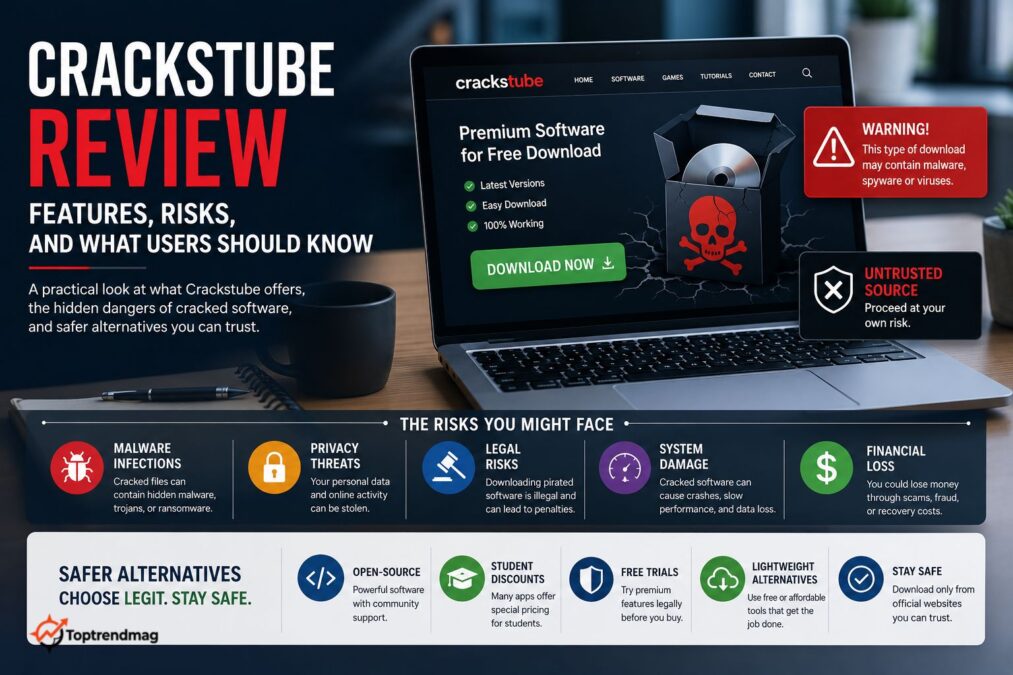
If you’ve ever searched for “cracks,” “free premium software,” or “patched downloads,” you may have seen Crackstube appear in search results, forums, or social media. From a distance, the name can feel casual almost like a normal content website. However, Crackstube is commonly associated with sites that distribute pirated or modified software and other copyrighted content.
This article is a practical review of what people typically expect from Crackstube, what usually happens during the download process, and most importantly what can go wrong. You’ll also find safety guidance and legitimate alternatives so you can make a better decision for your device and privacy.
Important: This is not a “how-to” for finding or using pirated files. The goal is to explain real-world risks clearly, because those risks are rarely described in detail.
Crackstube Bio
| Label | Information |
|---|---|
| Name | Crackstube |
| Type | Pirated software download site |
| Purpose | Provides cracked or modified apps/games |
| What Users Want | Free premium software access |
| Key Feature | Large download listings |
| Download Style | Often redirects and popups |
| Main Risk | Malware and trojan payloads |
| Other Risks | Unwanted software and browser changes |
| Privacy Risk | Tracking and data exposure |
| Legal Concern | Copyright infringement risk |
| Best Guidance | Avoid and use legal alternatives |
| User Impact | Device security and performance issues |
What “Crackstube” Usually Means Online
The term Crackstube is often used as shorthand for websites/pages that distribute pirated content especially software. These sites frequently offer:
- cracked versions of paid applications,
- patched programs,
- bundles that claim to bypass licensing.
Even when a site looks polished, the ecosystem around pirated software is often highly risky. Security authorities have repeatedly warned that pirated software may contain malware that can compromise systems and privacy.
Why this matters: cracked releases are typically distributed in packaged installers where the “crack” or modified component is often the part that carries the payload. In other words, the same file you’re tempted to run may also install harmful software.
What Users Think They’re Getting
Most people land on Crackstube-type pages with one main goal:
“I want the paid software, but I don’t want to pay.”
From a user perspective, this often turns into a simple checklist:
- a large selection of software and downloads,
- simple “download now” buttons,
- versions that appear to match what you need,
- a page that looks credible enough to click.
These expectations are normal. The problem is that piracy sites operate in an environment where authenticity and trust are hard to verify.
Common Features People Expect to See on Crackstube-Type Sites
Even if each Crackstube-style page differs, the overall pattern is similar.
1) A Content Library With Many Download Choices
Users often expect categories, search-like browsing, and lots of versions. A “store-like” layout can trick visitors into thinking it’s legitimate.
But a library of downloads does not equal legitimacy it only means more files are being offered.
2) A Quick Download Flow
These sites may claim fast or “one-click” downloads. In reality, users commonly face:
- redirect chains,
- popups or “fake download” prompts,
- “verification” steps designed to make you click again,
- download links that change over time.
Security guidance from major OS vendors consistently notes that downloading and installing from untrusted sources increases the risk of malware and potentially unwanted software.
3) Repackaged Installers and Modified Files
When cracks are included, the downloaded package may contain:
- a modified installer,
- an injected component,
- a license bypass tool,
- an extra “helper” executable that doesn’t belong in the normal software workflow.
This is dangerous because malware can hide inside files that look like part of a legitimate installation.
The Download Journey: Where Risks Spike
The user journey is often predictable across piracy ecosystems.
Step 1: Clicking a Download Button
On safe sites, a download is usually straightforward and verifiable (e.g., from a trusted vendor). On Crackstube-type pages, clicking frequently leads to:
- new pages,
- embedded scripts,
- “agree to download” prompts.
Redirects and click-through flows aren’t only annoying they’re commonly used to push unwanted installs.
Step 2: Waiting for a File That May Not Match the Claim
A major issue: the downloaded package may not be what the page claims. Common outcomes include:
- adware, spyware, or trojans inside the installer,
- a “crack” component that behaves like malware even if it doesn’t look obviously malicious.
Step 3: Executing the Installer or Crack Component
This is the most exposed moment. Security guidance explains that trojans can steal personal information, download additional malware, or provide attackers access to a device.
With pirated software, the probability that the executed file is unsafe is a core reason Crackstube-type sites are dangerous.
Risks: The Real Reasons to Avoid Crackstube-Type Sites
These aren’t theoretical risks they map directly to patterns security teams observe.
Malware and Trojan Infections
Cracked software is a known delivery mechanism for malware. Authorities have explicitly warned that pirated software may contain malware.
Security reporting also highlights that pirated game/software files can carry trojans, adware, and spyware.
What that means for you: even if a cracked app appears to work initially, harmful payloads may still run later in the background.
Unwanted Software, Browser Hijacking, and Redirect Traps
Not every threat looks like a full-blown trojan. Some are “quietly irritating” but still harmful:
- browser extensions you didn’t choose,
- adware that changes search results,
- redirect behavior sending you to unrelated pages,
- trackers that observe what you do online.
Even if your OS seems safe, unwanted software can still impact privacy and performance.
Privacy Exposure
A piracy source can be more than a one-time download. If a site uses tracking or the package includes spyware components, your browsing history and personal data may become visible.
This risk grows if you:
- use the same browser profile for work and personal life,
- log into accounts on the same device,
- store passwords in the browser.
Attackers often don’t need “dramatic” actions only the unsafe file execution.
Legal and Copyright Risks
Piracy isn’t only an ethical issue; it can create legal exposure depending on jurisdiction. In many places, distributing or infringing copyrighted software carries real legal risk.
System Damage Beyond the “Cracked App”
Even if the cracked program installs, the system can be affected more deeply:
- persistence mechanisms (malware that survives reboots),
- altered system processes,
- additional components installed by the payload,
- complicated removal.
The more “free” the download seems, the more likely the cost appears later as cleanup time, performance loss, or account compromise.
What Makes Crackstube-Type Sites Particularly Risky
You Can’t Verify Integrity
With legitimate vendors, signatures/checksums and trusted distribution channels help confirm authenticity. With Crackstube-type downloads, you often can’t verify what the executable actually is.
Social Engineering and Pressure to Click
Popups, misleading buttons, and confusing flows push users to act quickly.
The Business Model Incentivizes Risk
Many piracy sites rely on:
- ads,
- affiliate programs,
- redirect-based revenue.
That creates incentives to maximize clicks, hide unwanted installs, and rotate links to avoid takedowns.
Safety Guidance: If You Already Visited
Be honest people sometimes click before fully understanding consequences. If you already landed on Crackstube pages or clicked something, these steps can reduce harm.
Quick Device Triage
- Close browser tabs related to the site.
- Run a full scan using reputable security software.
- Check installed browser extensions and remove anything unfamiliar.
Check for Signs of Unwanted Behavior
Look for:
- unexpected popups,
- new search defaults,
- unusual CPU usage,
- unknown background processes,
- repeated redirects.
Password Hygiene
If you entered passwords on any page connected to the incident:
- change passwords from a trusted device if possible,
- enable multi-factor authentication,
- review account login activity.
What If You Downloaded Something?
If you downloaded a cracked installer package from Crackstube-type sources, treat it seriously.
Avoid Running “Again” to Confirm It Works
If you already executed it once, re-running increases exposure. Instead:
- run scans,
- isolate the device from the network if suspicious,
- consider deeper cleanup if you suspect compromise.
Consider a Safe Recovery Plan
If the installation involved unknown executables, a full reset/reinstall may be safer than manually hunting every component especially if you can’t identify exactly what ran.
Practical Alternatives That Don’t Put You at Risk
If your goal is “I need the software,” there are usually safer options.
Free Legal Options and Open-Source Programs
Many categories have capable alternatives:
- productivity tools,
- media editors,
- design utilities,
- development tools.
Open-source options also tend to be easier to scrutinize due to community visibility.
Trials, Student Discounts, and Lightweight Alternatives
Many vendors offer:
- free trials,
- discounted student pricing,
- free versions with limited features.
If you only need a specific feature, the limited option might be enough.
Subscription Access When It’s Worth It
Subscriptions can include updates, security patches, and support.
Red Flags to Watch For on Crackstube-Type Sites
- “Download” buttons that behave oddly,
- repeated prompts to click again,
- file naming designed to look official,
- “virus-free” claims with no evidence,
- excessive ads and redirects.
Even a “clean-looking” page can still deliver harmful content.
Frequently Asked Questions About Crackstube
Is Crackstube Safe?
The safe answer is: don’t assume it’s safe. Cracked/modified downloads are frequently associated with malware delivery, and security guidance warns against untrusted sources.
Can Antivirus Detect Malware From Cracked Files?
Sometimes, but not reliably. Malware can be newly crafted, hidden, or delivered in ways that bypass detection temporarily.
Why Do These Downloads Sometimes Seem to Work?
Some payloads don’t show obvious symptoms immediately. Others wait, install additional components later, or behave quietly.
What’s the Most Common Worst-Case Outcome?
Often:
- unauthorized device access,
- account compromise,
- privacy leakage,
- additional malware installation.
Final Verdict
If you’re searching Crackstube for free access to paid software, the blunt takeaway is simple:
The risk isn’t only breaking rules it’s running unknown code on your device. Authorities have warned that pirated software may contain malware, and security guidance consistently reinforces the danger of untrusted downloads and poor installation experiences.
A “free” download can quickly become expensive in time (cleanup), account safety, device performance, and privacy.
Choose legitimate alternatives: trials, legal free tools, student offers, or open-source options. It may take a bit longer at first but it’s usually faster in the long run because you don’t pay for security mistakes.