







teckaya construction equipment ltd management Teckaya Construction Equipment Ltd operates in a sector where good management is just as important as reliable machinery. Construction equipment has to be selected carefully, maintained properly, delivered when needed, and supported throughout its working life. A company working in this field therefore needs more than products; it needs planning, communication, customer understanding, and practical decision-making.
Available information from Teckaya’s own website describes the company as a construction-equipment platform focused on providing contractors, builders, and engineers with durable and budget-conscious equipment. Its stated management priorities include trust, innovation, customer satisfaction, reliable equipment, timely delivery, and after-sales support.
Because publicly available information about the company’s internal organization is limited, it is important to separate the company’s published statements from assumptions about specific executives or departments. The clearest picture comes from examining the management principles Teckaya itself presents and how those principles apply to construction-equipment operations.
BIO
| Label | Information |
|---|---|
| Company Name | Teckaya Construction Equipment Ltd |
| Industry | Construction Equipment |
| Business Type | Equipment and construction solutions |
| Main Focus | Construction machinery and support |
| Primary Customers | Contractors, builders, and engineers |
| Management Focus | Customer needs and reliable service |
| Key Value | Quality at practical costs |
| Equipment Focus | Durable and dependable machinery |
| Customer Service | Support before and after purchase |
| Delivery | Timely equipment delivery |
| Innovation | Use of modern technology |
| Core Values | Trust, innovation, and satisfaction |
| Growth Goal | Better construction solutions |
Teckaya’s Role in Construction
Construction projects depend heavily on equipment. Excavation, lifting, mixing, loading, material handling, and other activities can become slower and more expensive when the right machinery is unavailable.
Teckaya presents its role as helping contractors and other construction professionals obtain equipment that can make their projects more productive and cost-effective. The company’s published material emphasizes the combination of construction knowledge, technology, durability, and affordability.
This gives management an important responsibility. It must understand not only what equipment is available but also what customers actually need. A machine that looks attractive on paper may not be appropriate for every project. Site conditions, workload, budget, operating requirements, and maintenance considerations can all affect the final choice.
Good management therefore begins with understanding the practical problem before recommending a solution.
Management as the Company’s Direction
The phrase teckaya construction equipment ltd management refers to more than people occupying leadership positions. Management is responsible for giving a business direction and turning its objectives into everyday decisions.
Teckaya’s published description of its management places particular emphasis on customer satisfaction, trust, innovation, and delivering quality at a reasonable cost. It also identifies reliable equipment, timely delivery, and after-sales support as important parts of its approach.
These priorities matter because construction companies often work under strict deadlines. A delayed machine can affect workers, materials, schedules, and ultimately project costs.
Management must therefore think beyond the initial transaction. The real measure of an equipment supplier is often how effectively it supports a customer before, during, and after the purchase or equipment arrangement.
Understanding Customer Needs
One of the most important management responsibilities in the construction-equipment business is understanding customers.
Different contractors have different requirements. A small construction project may need a completely different equipment solution from a major infrastructure development. Even two projects of similar size may require different machinery because of location, soil conditions, workload, available labor, or deadlines.
Teckaya’s published material says its management focuses on providing solutions according to customer needs rather than concentrating solely on profit.
That approach can create stronger customer relationships. When management listens carefully, it becomes easier to recommend equipment that fits the actual project instead of simply promoting a product.
In practical terms, this means asking the right questions, understanding the customer’s budget, considering the intended use, and making sure expectations are realistic.
Balancing Quality and Cost
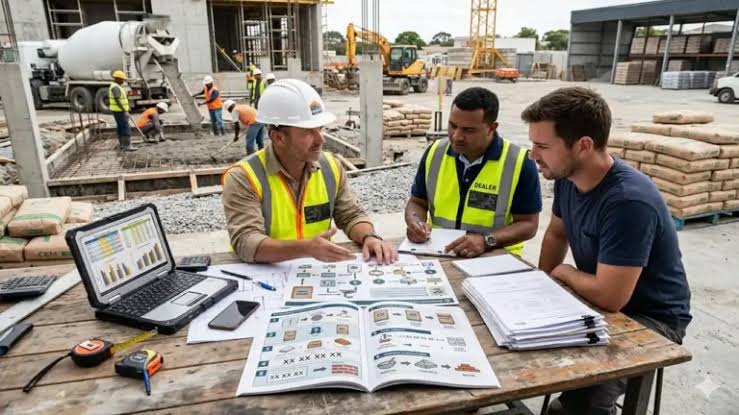
Construction companies constantly face pressure to control expenses. Equipment represents a major investment, so buyers generally want a balance between purchase cost, reliability, productivity, and long-term operating value.
Teckaya describes its solutions as budget-friendly and durable, with an emphasis on helping contractors improve productivity without placing unnecessary pressure on their budgets.
For management, achieving this balance requires careful decisions.
Choosing the cheapest equipment is not necessarily the best financial decision. A machine that requires frequent repairs or causes repeated delays can ultimately cost more than a higher-quality alternative. Similarly, purchasing equipment with capabilities far beyond a project’s needs can create unnecessary expense.
A sensible management approach considers the complete value of equipment rather than looking only at the initial price.
Keeping Operations Organized
Construction equipment management involves many moving parts. Equipment must be available, customer requirements must be communicated, and delivery arrangements must be coordinated.
Teckaya’s own description highlights timely delivery as part of its management strategy.
That objective requires organization. Even a reliable machine has limited value if it arrives after a project has already moved past the stage where it is needed.
Effective management therefore depends on clear communication between customers, equipment teams, suppliers, logistics personnel, and other relevant parties. When information moves quickly and accurately, problems can be identified earlier.
This is one reason management is so important in an equipment company: operational efficiency directly affects the customer’s construction schedule.
Field-Level Understanding
Another theme appearing in Teckaya’s published material is the importance of staying connected with workers and practical construction activities. The company describes a management approach that is not intended to remain limited to an office environment.
This field-oriented perspective can be valuable in construction.
People working directly with equipment often understand practical problems that are difficult to identify from paperwork alone. They know which machines are difficult to operate, which maintenance issues occur repeatedly, and where delays are likely to happen.
Management that listens to this experience can make better decisions. It can also improve communication between leadership and employees because workers can see that their practical knowledge is being considered.
Building a Strong Team
Equipment is only one part of a construction-equipment business. People remain responsible for planning, customer service, maintenance, logistics, sales, and decision-making.
Teckaya’s published material repeatedly emphasizes teamwork and cooperation between management and workers.
A strong team culture can improve day-to-day performance because employees understand their responsibilities and know where to seek help when problems arise.
For management, this means creating clear expectations and encouraging communication. It also means recognizing that employees working with heavy equipment need appropriate knowledge and practical competence.
A company can have excellent machinery, but without capable people managing and operating its processes, the equipment alone cannot guarantee successful results.
Equipment Reliability and Maintenance
Reliability is particularly important in construction because equipment failure can stop work.
Teckaya’s published information places emphasis on reliable equipment and quality solutions.
Management plays an important role in supporting that goal. Equipment should be selected with its intended application in mind, while maintenance requirements should be understood before machinery becomes a problem.
Preventive maintenance is generally more effective than waiting for major failures. Regular inspections can identify worn components and other issues before they develop into expensive breakdowns.
For an equipment-focused company, this mindset also supports customer confidence. Contractors are more likely to value a supplier when they receive practical support instead of being left alone after a transaction.
Customer Service After the Sale
The relationship between an equipment company and its customer should not necessarily end when equipment changes hands.
Teckaya specifically identifies after-sales support as part of its stated management strategy.
This is important because customers may need assistance with equipment use, maintenance, replacement parts, troubleshooting, or other practical matters.
Strong after-sales service can also help management learn more about its products. Customer feedback can reveal which equipment performs well, where improvements are needed, and what future customers may require.
In this way, customer service becomes more than a support function. It can become a source of information for future business decisions.
Technology and Modern Equipment
Construction is changing as technology becomes increasingly important. Modern equipment can improve productivity, accuracy, safety, and resource management when used correctly.
Teckaya’s mission statement connects construction equipment with innovation and technology, presenting these as important elements in its approach to the industry.
For management, adopting technology is not simply about buying newer machines. Leaders must consider whether a particular technology solves a real customer problem.
The best technology investment is usually one that produces a practical benefit. That might mean better productivity, easier operation, reduced downtime, improved monitoring, or more efficient use of resources.
Management must also consider whether employees and customers have the knowledge required to use new technologies effectively.
Safety as a Management Responsibility
Construction equipment can involve significant operational risks. Heavy machinery requires proper handling, appropriate working procedures, and attention to site conditions.
Safety should therefore be treated as a management responsibility rather than something left entirely to individual workers.
Although Teckaya’s public material focuses more heavily on equipment, affordability, reliability, and customer service than on publishing a detailed safety-management framework, safety remains an important consideration for any responsible construction-equipment operation.
Management should encourage appropriate training, equipment inspections, clear operating procedures, and communication about potential hazards.
A safety-conscious culture can protect workers while also reducing the possibility of costly interruptions.
Managing Resources Carefully
Financial and physical resources must be managed carefully in the construction-equipment sector.
Machinery represents capital. Maintenance requires money and time. Transportation creates additional costs. Employees need training and support. Customers expect competitive prices.
This makes resource management one of the less visible but more important responsibilities of leadership.
Teckaya’s emphasis on budget-friendly solutions suggests that cost awareness is an important part of its stated approach.
Good management means finding ways to control unnecessary expenses without sacrificing reliability or customer service.
The goal is not simply to spend less. The goal is to use available resources where they create the greatest value.
Communication and Team Coordination
Construction projects involve many people, and poor communication can create unnecessary delays.
For an equipment company, communication must work in several directions. Customers need accurate information. Employees need clear instructions. Equipment teams need to understand requirements. Suppliers and logistics partners need timely information.
Teckaya’s published descriptions emphasize teamwork, communication, and coordination between management and workers.
When communication is strong, management can respond more quickly to changes. If a customer’s requirements change, for example, the relevant teams need to know before equipment is dispatched.
This is why communication is not simply an administrative task. It directly affects operational performance.
Handling Industry Challenges
The construction-equipment industry can face several challenges at once. Demand can change, equipment costs can rise, supply chains can become complicated, and customers can become more selective about where they spend their money.
Management must be prepared to respond without losing sight of long-term objectives.
For Teckaya, its publicly stated focus on affordability, reliability, technology, and customer satisfaction provides a useful framework for dealing with these pressures.
A company that understands its customers can adjust its services when market conditions change. A company that maintains strong operational discipline can also respond more effectively to unexpected problems.
The ability to adapt is therefore an important part of sustainable management.
Planning for Future Growth
Growth requires more than increasing sales. A growing equipment company must be able to maintain service quality as demand increases.
This can mean improving internal processes, strengthening customer support, expanding equipment options, developing employee capabilities, and adopting useful technologies.
Teckaya’s website presents its vision around modern construction solutions and describes its ambition to support contractors, builders, and engineers through reliable and accessible equipment.
For management, future growth should therefore be connected to customer value. Expanding without maintaining reliability or service quality can weaken a company’s reputation.
A measured approach is more sustainable: understand what customers need, improve existing processes, and then expand where there is a clear opportunity.
The Importance of Trust
Trust is especially valuable in the construction-equipment sector because customers are often making decisions that can affect entire projects.
Teckaya explicitly identifies trust as one of the values associated with its management approach.
Trust is built through consistency. Customers need accurate information, dependable equipment, reasonable communication, and support when problems occur.
A company cannot establish long-term credibility through marketing alone. Its everyday decisions have to support the promises it makes.
For teckaya construction equipment ltd management, this makes customer relationships a central part of the broader business strategy.
What Makes the Management Approach Important?
The available information suggests that Teckaya’s management approach centers on several connected ideas rather than one single strategy.
Customer needs influence equipment recommendations.
Cost awareness helps keep solutions accessible.
Reliability supports project continuity.
Timely delivery helps customers maintain schedules.
After-sales support extends the relationship beyond the initial transaction.
Teamwork connects management with employees and practical operations.
Technology and innovation provide opportunities to improve construction processes.
Together, these areas create a management model focused on practical value rather than equipment alone.
Looking Ahead
The construction industry will continue to change as projects become more complex and technology develops. Equipment suppliers will have to respond to changing expectations around productivity, cost, reliability, safety, and service.
For Teckaya, maintaining a clear management philosophy could be important as the company develops. Its published mission already emphasizes durable equipment, technology, affordability, customer satisfaction, timely delivery, and after-sales support.
The next stage of growth will likely depend on how effectively those principles are translated into consistent everyday operations.
A strong reputation is built gradually. Every equipment decision, customer interaction, maintenance response, and delivery contributes to how a company is viewed.
Conclusion
Teckaya Construction Equipment Ltd management plays an important role in shaping how the company approaches customers, equipment, employees, and growth. Publicly available company information presents a management philosophy built around trust, innovation, customer satisfaction, reliability, affordability, timely delivery, and after-sales support.
The company’s role goes beyond simply providing construction equipment. Effective management in this sector requires understanding project requirements, balancing quality with cost, coordinating people and resources, supporting customers, and adapting to technological and market changes.
There is limited independently verified public information about Teckaya’s complete internal management structure, so specific claims about individual executives or departments should be treated cautiously. What can be established from the company’s published material is its stated focus on practical construction solutions and long-term customer relationships.
Ultimately, successful construction-equipment management comes down to a simple principle: provide the right support, the right equipment, and the right service at the right time. When those elements work together, management becomes a genuine driver of business performance rather than simply an administrative function.
Frequently Asked Questions
1. What does Teckaya Construction Equipment Ltd management focus on?
Teckaya Construction Equipment Ltd management focuses on customer satisfaction, reliable equipment, innovation, timely delivery, and after-sales support. The company also emphasizes providing practical and budget-friendly solutions for construction professionals.
2. How does Teckaya management support its customers?
Management aims to understand customer requirements and provide equipment that fits their projects. Its stated approach also includes maintaining long-term relationships through reliable service and after-sales support.
3. Why is teamwork important at Teckaya?
Teamwork helps connect management with employees and day-to-day construction activities. Teckaya’s published material describes cooperation and communication as important parts of its working approach.
4. How does management help improve construction efficiency?
Management can improve efficiency by coordinating equipment, delivery, customer requirements, and support services. Teckaya states that its equipment is intended to help contractors, builders, and engineers improve productivity and make projects more cost-effective.
5. What values are associated with Teckaya Construction Equipment Ltd management?
The company’s published values include trust, innovation, and customer satisfaction. It also highlights reliable equipment, timely delivery, and after-sales support as important parts of its management strategy.