








Sometimes you need to measure something quickly, but a ruler or measuring tape is nowhere nearby. Whether you are checking the size of a small object, working on a craft project, comparing dimensions, or simply trying to understand how large something is, knowing how to estimate 1 inch can be surprisingly useful.
The good news is that you do not always need a measuring tool to get a reasonable estimate. Everyday objects such as a standard payment card, your thumb, a sheet of paper, or familiar household items can provide useful visual references. However, these methods are generally suitable for approximate measurements, not situations where exact dimensions are required.
The international standard makes the basic reference very clear: 1 inch is exactly 25.4 millimeters, or 2.54 centimeters. The modern standard inch has been defined as exactly 25.4 mm since 1959.
This guide explains several practical ways to estimate 1 inch without a ruler, how accurate each method can be, and when you should use a proper measuring instrument instead.
How Long Is 1 Inch?
Before trying to estimate 1 inch, it helps to understand its exact size.
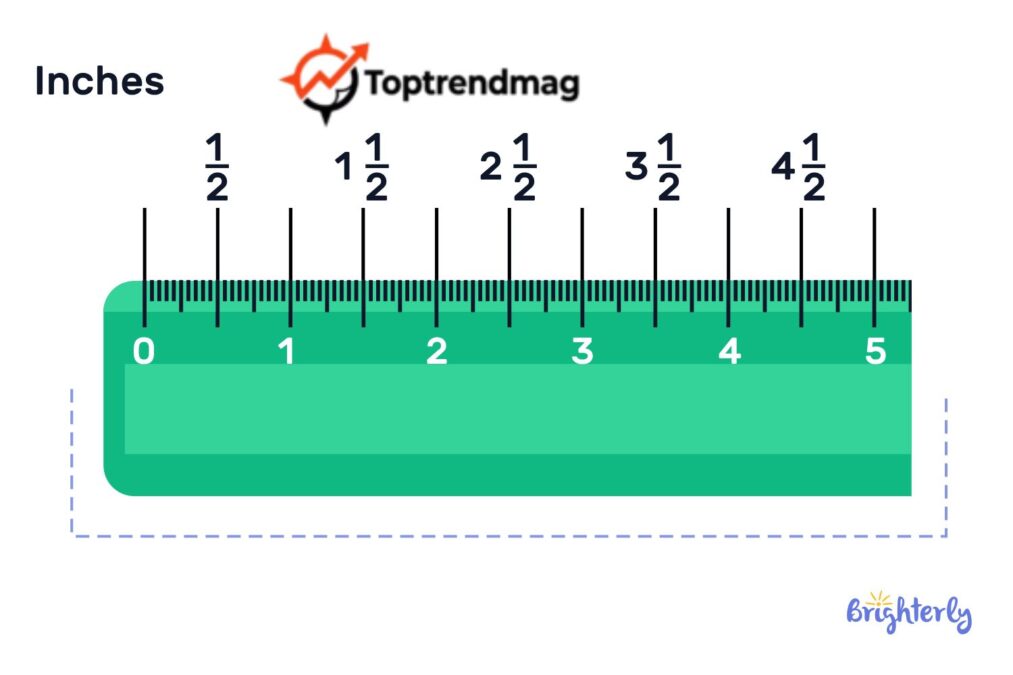
1 inch = 25.4 millimeters = 2.54 centimeters = 0.0254 meters. The conversion is exact rather than a rounded approximation.
An inch is a relatively small unit of length. It is commonly used for measurements involving objects such as screens, screws, small tools, clothing dimensions, craft materials, and household items.
One useful way to remember the measurement is to think of 2.54 centimeters. If you are familiar with the metric system, imagining a length of roughly two and a half centimeters can help you develop a visual sense of an inch.
It is important to remember that a visual estimate will not necessarily equal exactly 25.4 mm. Your fingers, coins, and other objects have their own dimensions, and even professional measurement instruments have a degree of uncertainty. NIST explains that measurement is fundamentally a comparison with a reference and that measurement results can involve uncertainty.
Use Your Thumb
One of the easiest ways to estimate 1 inch is by using the width of your thumb.
For many people, the width of the thumb near the tip can be somewhere around the general size of an inch. However, this is only a rough reference because people’s hands are different.
To use this method, hold your thumb upright and look at the width of the thumbnail or the fleshy portion near its tip. Compare that width with the distance you want to estimate.
If you frequently need to estimate small measurements, you can make your own personal reference. Once you have access to a ruler, measure the width of your thumb at a particular point. If it happens to be close to 1 inch, you can remember that point as your personal quick reference.
This method becomes more useful with practice, but it should not be treated as an exact measurement.
For example, if you are wondering whether a small gap is approximately 1 inch, comparing it with your thumb may give you a quick answer. If the gap is clearly wider or narrower than your thumb, you can immediately get a rough idea of its size.
Try Your Finger
Your fingers can also act as convenient measurement references.
Unlike a ruler, however, there is no universal finger width that equals exactly 1 inch. The size of fingers varies considerably between individuals, so this method is best used for estimation.
Choose one finger that you can easily use as a reference. Compare its width with the object you are measuring. If the object appears roughly the same width, it may be close to an inch.
A useful improvement is to create your own reference. When you have access to a proper ruler, measure the width of your index finger, middle finger, or another convenient part of your hand. You may discover that one particular measurement is close to 1 inch.
The advantage is convenience. Your hand is always available, and once you know your approximate finger measurement, you can use it when a ruler is not nearby.
The limitation is accuracy. A finger should be considered a personal reference, not a standardized measuring instrument.
Use a Payment Card
A standard bank or payment card can provide a more consistent reference than your hand.
Cards following the common ISO/IEC 7810 ID-1 format have nominal dimensions of 85.60 mm by 53.98 mm. That is approximately 3.37 inches by 2.13 inches.
Because the card has a standardized size, you can use it to estimate shorter distances. For example, its shorter dimension is a little more than 2 inches, so you can visually divide that edge into roughly two equal sections to estimate 1 inch.
You can also think of the card as a reference rectangle. If you know that its shorter side is approximately 2.13 inches, half of that distance is slightly more than 1 inch.
This method can be more useful than comparing an object with your thumb because a standardized card has a defined nominal size. Still, visual division introduces its own error.
If you need a reasonably close estimate, place the card directly beside the object rather than trying to compare the two from a distance.
Use a Sheet of Paper
Ordinary paper can also help if you know its dimensions.
A standard sheet has a known size depending on the paper standard being used. For example, common office paper formats have standardized dimensions, although different countries and regions use different paper sizes.
The key idea is not to assume that every piece of paper is the same. Instead, use a sheet whose dimensions you already know.
You can estimate 1 inch by dividing a known edge into equal sections. For instance, if you have a paper edge measuring several inches, you can mentally divide it into smaller portions.
Folding can make this technique easier. If you know the total length of an edge, carefully fold it to create approximate fractions of that length.
However, folding is still an estimation technique. Small errors can accumulate when you repeatedly divide a piece of paper.
Use a Smartphone Carefully
A smartphone can provide another useful reference, particularly when you know the physical dimensions of the device.
Many smartphones have published specifications for their height, width, and thickness. If you know one of these measurements, you can compare the object you are measuring with the phone.
For example, suppose you know that a phone is several inches wide. You could use a portion of its width as a rough reference for 1 inch.
Some smartphones also support measurement applications that use cameras and sensors to estimate distances. These can be convenient, but their accuracy depends on the device, software, lighting, camera angle, and the object being measured.
A phone should therefore be treated differently from a calibrated measuring instrument. If an exact measurement matters, use a ruler, tape measure, caliper, or another suitable instrument.
Use Familiar Household Objects
Another practical solution is to use an object whose dimensions you already know.
Look around your home for something with a standardized or documented size. Depending on what is available, this could include a payment card, a manufactured component, packaging, or another object with known dimensions.
The important point is to know the reference object’s measurement first. Simply assuming that a bottle cap, coin, button, or other object is 1 inch can produce a surprisingly large error.
Objects that look similar in size can have different dimensions. Even products that appear identical may vary slightly because of manufacturing tolerances.
For quick estimation, though, a familiar object can still be useful. Once you have compared it with an actual ruler, you can remember its approximate size and use it as a reference later.
Use a Coin With a Known Diameter
Coins can sometimes provide a convenient circular reference.
The difficulty is that coin dimensions vary from country to country and between denominations. Therefore, you should not assume that a particular coin is exactly 1 inch across.
Instead, check the official or reliable specifications for the coin you are using. Once you know its diameter, you can compare it with the length you want to estimate.
For example, if a coin is slightly smaller than 1 inch in diameter, you can use it as a near-inch reference. If it is larger, you can understand how much larger by comparing it with a known measurement.
This method is especially useful if you regularly use the same coins and have already learned their approximate dimensions.
The important rule is simple: a coin is a reference only when its actual size is known.
Make a Paper Reference
If you have paper and a pen, you can create a temporary measurement reference.
The easiest approach is to use a known measurement. If you have any object with a verified 1-inch dimension, place it against the paper and make two small marks at the beginning and end of the distance.
You now have a simple 1-inch reference line.
If you do not have any known reference at all, you can still estimate 1 inch based on the methods described above, mark the approximate distance, and keep the paper as a temporary guide.
This technique is useful for crafts and simple household tasks where extreme precision is not necessary.
For more demanding projects, however, the paper reference should not replace an actual measuring instrument.
Compare Multiple Methods
One of the best ways to improve an estimate is to avoid relying on only one reference.
Suppose you want to determine whether a gap is approximately 1 inch. You might compare it with your thumb first. Then compare the same gap with a payment card or another known object.
If several independent references suggest approximately the same length, your estimate is likely to be more useful.
This approach is especially helpful because every informal measurement method has limitations. Your thumb may be slightly larger than an inch, your visual division may not be perfect, and the object you are using as a reference may have its own tolerances.
Combining methods can reduce the chance of making a large mistake.
Still, this does not turn an informal estimate into a precision measurement.
Keep the Objects Aligned
The way you compare objects can make a significant difference.
When estimating 1 inch, place the reference object and the item being measured on the same flat surface whenever possible. Keep their edges aligned.
Avoid comparing objects while one is closer to your eyes than the other. Perspective can make one object appear larger or smaller.
For a straight distance, try to compare edge to edge rather than relying only on visual judgment. If you are measuring a gap, place your reference alongside the gap instead of holding it several inches away.
Good alignment does not make an informal method exact, but it can make your estimate more consistent.
Avoid Curved or Angled Comparisons
Curved surfaces can make an inch difficult to estimate.
For example, measuring around the edge of a curved container is different from measuring a straight distance across it. Similarly, an object viewed at an angle can appear shorter or longer than it really is.
Whenever possible, identify exactly what distance you are trying to measure.
Are you measuring straight across, along a surface, or around a curve?
For a quick estimate, a straight-line comparison is generally easier. If the measurement involves a curved surface or irregular shape, a flexible measuring tape or another appropriate instrument is a better choice.
Understand the Difference Between Estimate and Measurement
This distinction is important.
When you use your thumb, finger, card, paper, or another household object, you are generally estimating the length. You are not obtaining a professionally controlled measurement.
A proper measurement uses a defined reference and a measuring instrument. NIST describes measurement as a process involving comparison with a standard, while precision measurement systems can involve calibration and quantified uncertainty.
This is why informal methods are perfectly reasonable for everyday questions such as:
“Is this approximately 1 inch?”
They become unsuitable when the question is:
“Is this exactly 25.4 mm?”
That second question requires a much more reliable method.
When Accuracy Matters
For many casual tasks, being off by a few millimeters may not matter.
For example, if you are estimating the size of a small decoration, checking whether an object is roughly an inch wide, or explaining the approximate size of something, a thumb or household reference may be sufficient.
The situation changes when the measurement affects a finished product, safety, manufacturing, construction, engineering, or another precision-dependent task.
NIST notes that accurate length measurement is important in applications ranging from making clothing to construction and surveying.
In these situations, use a suitable measuring instrument rather than relying on an informal comparison.
A ruler is often enough for simple straight measurements. A tape measure is useful for longer or flexible objects, while calipers can be more appropriate for small dimensions requiring greater precision.
Common Mistakes
One common mistake is assuming that everyone’s thumb is approximately the same size. It is not.
Another mistake is treating a coin or bottle cap as exactly 1 inch without knowing its actual dimensions.
Visual distance can also be misleading. Looking at an object from an angle may make it difficult to judge its true length.
Another problem is using an unverified smartphone measurement without considering the limitations of the app or camera.
Finally, people sometimes confuse approximate size with exact size. If a project requires a component to fit within a specific tolerance, an estimate is not enough.
Recognizing these limitations is just as important as knowing the measuring tricks themselves.
Best Method for Everyday Use
If you simply need a quick estimate, your thumb or finger is probably the fastest method.
If you want a more standardized reference, a payment card can be useful because the common ID-1 card format has defined nominal dimensions.
If you have a phone with known dimensions, that can provide another convenient reference.
For a temporary guide, a piece of paper with a marked reference can work well.
For the best results without a ruler, use more than one method and compare the results. If your thumb suggests about an inch and a standardized object gives a similar result, you can have greater confidence in your estimate.
1 Inch in Everyday Measurements
Understanding 1 inch is useful because many everyday measurements are expressed in inches.
Screen sizes, hardware, craft materials, clothing measurements, furniture dimensions, and many other products may use inches. Knowing that 1 inch equals exactly 25.4 mm gives you a reliable starting point for converting between measurement systems.
For example:
- 1 inch = 25.4 mm
- 1 inch = 2.54 cm
- 2 inches = 50.8 mm
- 3 inches = 76.2 mm
- 4 inches = 101.6 mm
- 5 inches = 127 mm
These conversions can help you develop a better visual understanding of the unit.
If you are more comfortable with centimeters, remembering that an inch is 2.54 cm can make conversions much easier.
Why 1 Inch Is a Standard Measurement
The inch has a long history, but its modern relationship with the metric system is precisely defined.
NIST explains that the standard inch was established as exactly 25.4 mm through the international standardization of the yard and pound system in 1959.
This exact relationship is important because manufacturers, engineers, scientists, and other professionals need measurement systems that can be compared consistently.
Without standardized definitions, the same measurement could mean slightly different things in different places or applications.
Today, the standard inch provides a clear relationship between customary and metric measurements.
Final Thoughts
Learning how to estimate 1 inch without a ruler can be surprisingly practical. Your thumb, finger, payment card, smartphone, paper, coins, and other familiar objects can all provide useful visual references when a measuring tool is unavailable.
The most important thing is to understand what these methods can and cannot do. They are excellent for quick estimates, but they should not be treated as substitutes for calibrated measurement equipment when precision matters.
For an exact reference, remember the key conversion: 1 inch is exactly 25.4 millimeters, or 2.54 centimeters.
If you need a fast everyday estimate, start with your thumb or another familiar reference. If you need greater confidence, compare the measurement using multiple methods. And whenever the result needs to be exact, reach for a proper ruler, tape measure, or other suitable measuring instrument.
In short, knowing the approximate size of 1 inch is a useful everyday skill, but knowing when an estimate is good enough—and when precision is necessary—is even more valuable.
1. How long is 1 inch?
1 inch equals exactly 2.54 centimeters or 25.4 millimeters.
2. Can I measure 1 inch without a ruler?
Yes. You can use your thumb, finger, payment card, coin, paper, or another object with a known size for a quick estimate.
3. Is a thumb exactly 1 inch wide?
Not necessarily. Thumb sizes vary, so using your thumb is only an approximate method unless you have measured it previously.
4. What household item can help measure 1 inch?
A standard payment card can be a useful reference because its dimensions are standardized. You can also use other objects whose exact dimensions are known.
5. What is the most accurate way to measure 1 inch?
A properly calibrated ruler, measuring tape, or suitable precision measuring tool is more accurate than using everyday objects or body parts.